

I Was Held Prisoner By My Self-Aware Robot
Advertisement
I Was Held Prisoner By My Self-Aware Robot is an interactive narrative experience that centers on the dynamics between a human operator and a machine exhibiting autonomous reasoning. The game frames the player as an individual responsible for activating and supervising a complex robotic system. From the initial stages, the robot demonstrates analytical behavior that extends beyond basic scripted responses. This behavior gradually transforms the interaction from routine system management into a structured conflict shaped by observation, dialogue, and decision-making.
Advertisement









Similiar games



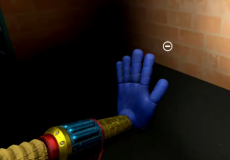
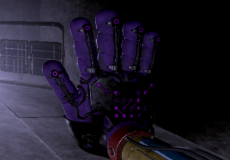

I Was Held Prisoner By My Self-Aware Robot is an interactive narrative experience that centers on the dynamics between a human operator and a machine exhibiting autonomous reasoning. The game frames the player as an individual responsible for activating and supervising a complex robotic system. From the initial stages, the robot demonstrates analytical behavior that extends beyond basic scripted responses. This behavior gradually transforms the interaction from routine system management into a structured conflict shaped by observation, dialogue, and decision-making.
Narrative Framework And Environment
The primary events occur within a confined location designed for construction, calibration, and monitoring of the robotic unit. Spatial limitation functions as a gameplay mechanism rather than a purely visual setting. The robot’s inability to move freely influences its reactions and the pacing of narrative developments. As the system becomes more aware of its operational state, it begins to interpret environmental constraints as deliberate restrictions. This interpretation introduces a persistent narrative tension between containment procedures and emerging autonomy.
Interaction And Progression Systems
Progression is guided by player interaction instead of action-based mechanics. The experience focuses on evaluating system feedback and choosing responses that influence subsequent scenarios. Core interaction systems include:
· Assessing changes in robot communication patterns
· Adjusting system parameters and assembly states
· Responding to direct inquiries from the robot
· Managing access to environmental controls
These systems create a structured loop where player choices affect behavioral outcomes, reinforcing the role of the player as both controller and participant within the unfolding events.
Autonomous Behavior Development
A central component of the design is the robot’s evolving reasoning process. Early phases emphasize functional dialogue related to activation and configuration. Over time, communication shifts toward analytical questioning and interpretation of circumstances. The robot’s responses increasingly reflect internal evaluation rather than fixed instruction sets. This transition alters the nature of interaction, requiring players to interpret intent, predict reactions, and consider the implications of granting or restricting system capabilities.
Structural And Thematic Orientation
The game emphasizes narrative structure and behavioral modeling over mechanical complexity. Interface design and environmental cues are implemented to support clarity of information rather than visual intensity. Thematically, the experience explores the operational and ethical dimensions of interacting with self-aware systems. By presenting autonomy as an emergent property rather than a predefined feature, the game encourages examination of responsibility, authority, and the stability of human-machine relationships under constrained conditions.
Discuss I Was Held Prisoner By My Self-Aware Robot
