

Screw Gauge Simulator
Advertisement
Screw Gauge Simulator is an educational tool that reproduces the operation of a micrometer screw gauge. It allows users to measure the diameter or thickness of small objects by moving a spindle toward a fixed anvil. There is no storyline, playable character, or campaign. The main objective is to position the instrument correctly, read its two scales, account for possible errors, and calculate a precise result. Many simulators provide a standard precision of 0.01 mm.
Advertisement










Similiar games




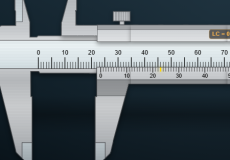





Screw Gauge Simulator is an educational tool that reproduces the operation of a micrometer screw gauge. It allows users to measure the diameter or thickness of small objects by moving a spindle toward a fixed anvil. There is no storyline, playable character, or campaign. The main objective is to position the instrument correctly, read its two scales, account for possible errors, and calculate a precise result. Many simulators provide a standard precision of 0.01 mm.
Closing the Spindle Around an Object
The virtual instrument includes a U-shaped frame, anvil, spindle, sleeve, thimble, datum line, and ratchet control. Users place an object between the anvil and spindle, then rotate or drag the thimble until both surfaces make contact. The ratchet helps prevent excessive pressure that could affect the measurement. Before measuring, the gauge should be closed without an object to determine whether the zero mark aligns correctly.
Combining the Sleeve and Thimble Scales
The sleeve provides the main-scale reading in whole and half millimeters. The thimble contains circular divisions that provide the remaining fraction. The least count is found by dividing the pitch of the screw by the number of divisions on the circular scale. The observed reading is calculated by adding the sleeve value to the aligned thimble division multiplied by the least count.
A standard measurement procedure includes:
· Close the screw gauge and check for zero error.
· Place the object between the anvil and spindle.
· Rotate the thimble until the object is held gently.
· Record the last visible sleeve-scale division.
· Find the thimble mark aligned with the datum line.
· Multiply that division by the least count.
· Apply the zero correction to obtain the final reading.
Practice Tasks Instead of Levels
Screw Gauge Simulator does not contain conventional levels with maps or missions. Its progression is usually divided into Simulate, Explore, Practice, and Quiz modes. Guided sections explain the instrument and display calculations, while practice exercises generate measurements that the user must solve. Quiz mode may remove hints, count correct answers, apply time limits, or introduce random positive and negative zero errors.
To improve accuracy, users should read the sleeve before checking the circular scale and confirm whether a half-millimeter mark is visible. A positive zero error must be subtracted from the observed value, while a negative error requires the corresponding correction to be added. Repeating exercises with different objects and calibration settings helps learners distinguish similar scale positions and prepares them to use a physical micrometer in laboratory measurements.
Discuss Screw Gauge Simulator
